About
Noor Haddad
Designer & creative coder, Amsterdam
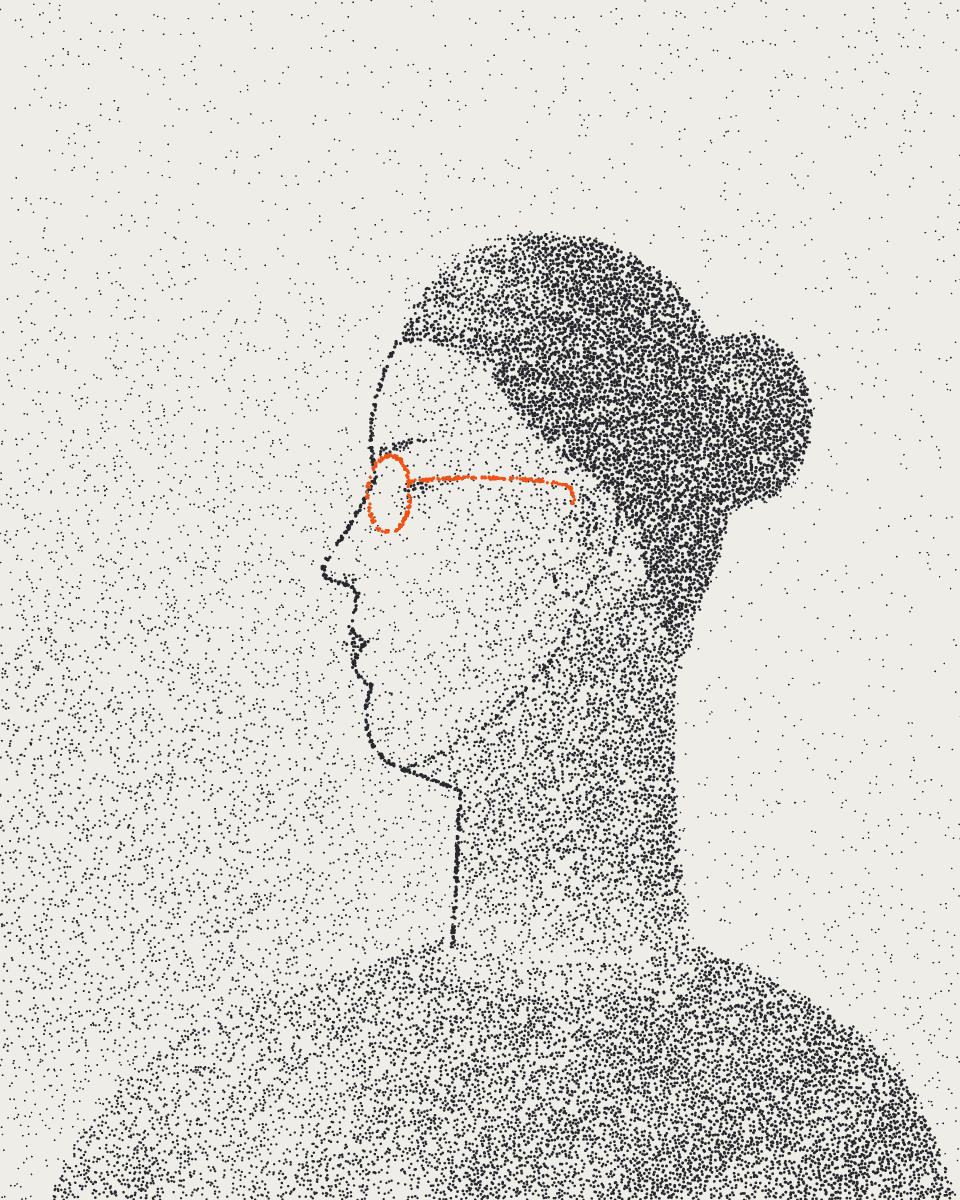
Bio
I’m Noor, an independent designer and creative coder in Amsterdam. Most of my work sits where a visual system has to behave: identities that redraw themselves, tools that turn data into sound, interfaces you stand inside rather than look at.
I studied graphic design in Beirut and interaction design in Eindhoven, then spent six years in studios building brand systems and real-time graphics for cultural clients. Since 2022 I work on my own, usually as the person who both designs the thing and writes the first version of it.
I like small teams, clear constraints and projects where the code is part of the idea rather than the way it gets shipped.
Services
- 01
Generative identity systems
Identities that draw themselves from a rule, plus the tool your team uses to make them.
- 02
Creative coding and real-time graphics
Visuals for stages, screens and installations that run live instead of being rendered once.
- 03
Data sonification and visualisation
Turning measurements into something people can see or hear at a glance.
- 04
Tools and prototypes
Internal tools, playgrounds and working prototypes that settle an argument before anything is built properly.
- 05
Spatial interfaces
Interfaces for headsets and rooms, designed and reviewed at 1:1 scale.
- 06
Workshops and teaching
Short courses on code as a design material, for studios and art schools.
Experience
- 2022 – nowIndependent designer and creative coder — Own practiceAmsterdam
- 2023 – nowGuest lecturer, Light & Number — Kade School of InteractionRotterdam
- 2019 – 2022Senior designer, creative technology — Lumen & PolAmsterdam
- 2017 – 2019Designer, identity and motion — Fabrikant StudioRotterdam
- 2016 – 2017Junior designer — Werkplaats NoordEindhoven
Education
- 2014 – 2016MA Interaction Design — Graduated with the project “Weather for Two”Eindhoven
- 2009 – 2013BA Graphic Design — Thesis on Arabic and Latin type in public signageBeirut
Selected clients
- Veld Kunsthal
- Mira Sol / Halfmoon Records
- Kade School of Interaction
- Waterschap Lage Delta
- Hollander & Saar Architects
- Long Take
- Paviljoen Zuid
- Orfeo Ensemble
- Meridian Type Foundry
- Nieuwe Haven Film Fund
- Coastline Radio
- Bureau Wolk
- Tegelhuis Delft
- Atelier Moreau
- Noordlicht Festival
- Studio Lindenhof
Tools
- Figma
- TouchDesigner
- GLSL
- Blender
- Ableton Live
- Glyphs
- p5.js
- TypeScript
Writing
Notes and talks
September 2026Give the tool fewer knobsTalk at Kaderwerk, Utrecht
The first version of the Veld generator had nineteen sliders. It could make anything, which meant the comms team made something different every time, and the identity dissolved by its third exhibition. The version they use now has three: density, drift and seed.
Every control you add to a generative tool is a decision you hand back to someone who hired you so they wouldn’t have to make it. Locking the rest isn’t distrust. It’s the design. The system decides the type, the inks, the margins and the way the lines meet the edge of the sheet; the person decides how loud this particular show should be.
My test now is simple. If two people using the tool on the same afternoon make posters that look like they came from different institutions, there are too many knobs. If they make posters that look identical, there are too few. Somewhere between is a family, and a family is what an identity is for.
November 2025The last working frameKade School reader, issue 3
Teaching shaders, I noticed students didn’t quit at hard ideas. They quit at black screens. One missing semicolon and the picture they had been nudging for twenty minutes vanished, replaced by a log written for compiler engineers.
So in Uniforms the picture never goes away. While you type, the last version that compiled keeps running, and the error appears next to the line it belongs to, in a sentence: “This line needs a semicolon at the end.” The difference in the room was immediate. People kept typing.
I think about this beyond shaders. Any tool that punishes a small mistake by taking away everything you had is teaching people to stop experimenting. Keep the last good state on screen, explain what changed and let them carry on. Most of learning is just not being thrown out.
March 2025Quiet by defaultNotes from the Undertone pilot
A control room at three in the morning is not a concert hall. When we started sonifying river sensors for the Lage Delta night shift, the first prototype sounded like a modular synth demo, and the operators turned it off within an hour.
The version that stayed on is almost silent. Normal readings sit below the hum of the room: a low drone you notice only when it stops. Only deviation is allowed to be audible, and it arrives as a sour interval rather than an alarm, so it pulls your attention without spiking your pulse.
The lesson I took away is that sound design for monitoring is mostly subtraction. You’re not making the data expressive. You’re making normal disappear, so that the one thing worth hearing has the room to itself.
February 2024Aspect ratio is a gridLong Take, issue 12
Film magazines crop stills to fit their columns, and every crop is a small act of vandalism. A frame shot at 2.39:1 was composed for that width; trim it to a tidy rectangle and you lose the actor standing at the edge, which was often the point.
For the Long Take redesign we turned the problem around and built the grid from the films. Columns and rows are derived from 1.37, 1.85 and 2.39, so any still drops in at its native ratio and still lines up with the text around it. The layouts look less regular than a classic magazine, and much more like cinema.
It meant giving up some control over the page. I think that was the right trade: the pictures are the subject, so the pictures set the measure.