Case study 02 / 06
Field: orbit
Music visualiser
Low Orbit
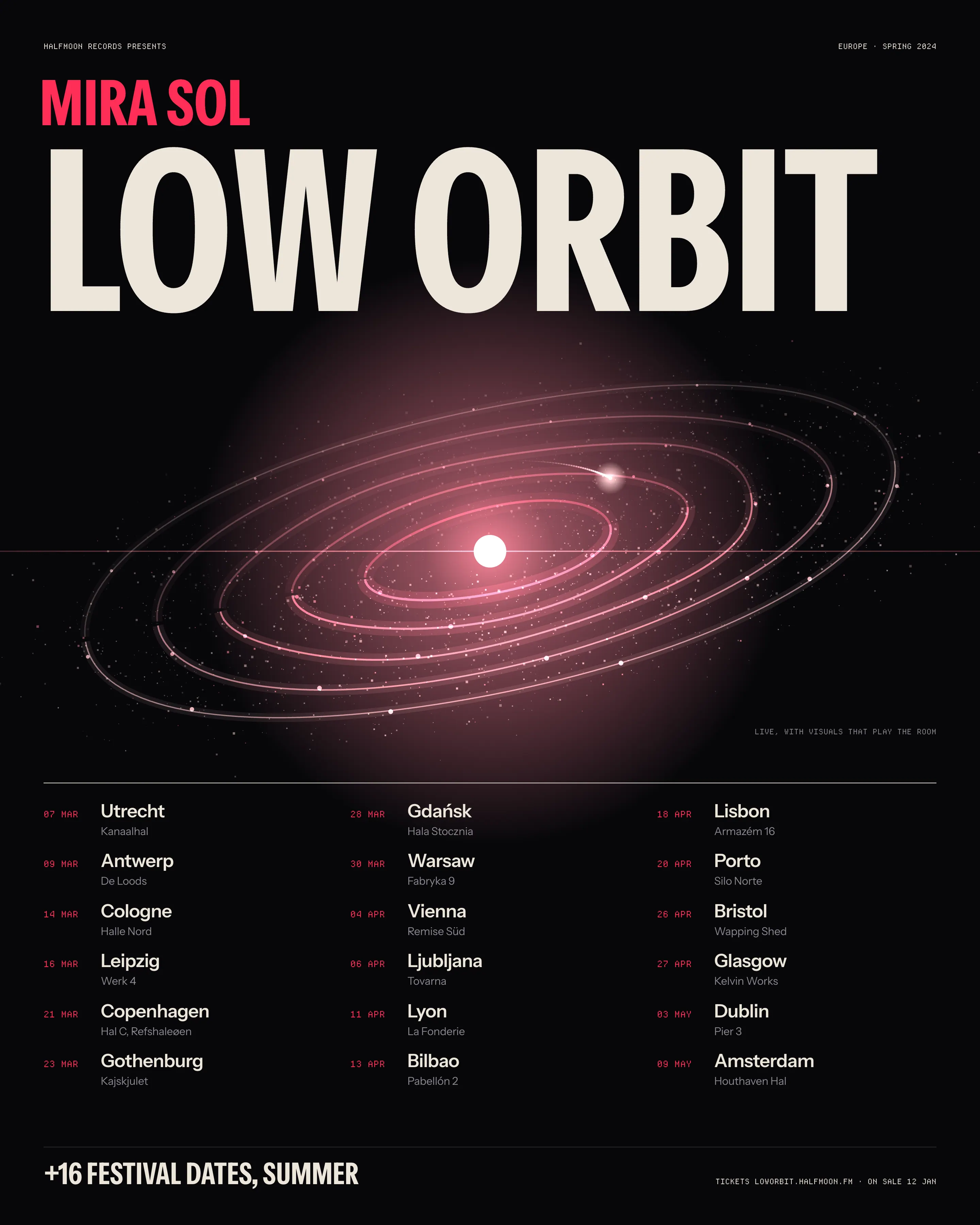
A tour visualiser driven by stems, built to survive 34 different stages
- Client
- Mira Sol / Halfmoon Records
- Year
- 2024
- Role
- Real-time visuals, show system design
- Team
- Noor Haddad — visuals & code
- Mira Sol — artist
- Daan Koster — lighting design
- Ana Petrović — tour management
The brief
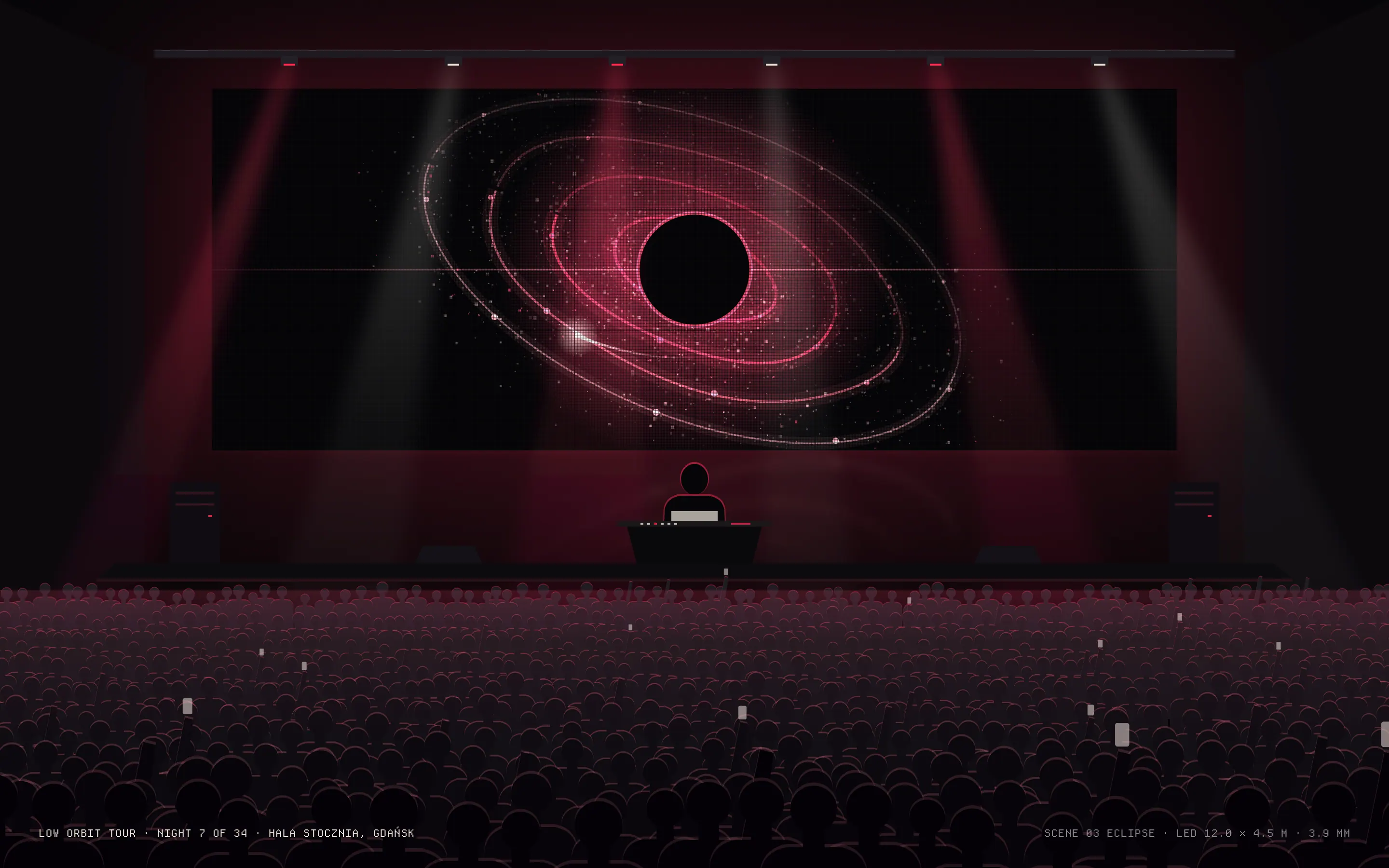
Mira Sol’s Low Orbit tour was 34 nights in nine weeks: clubs for 200 people, converted factory halls and, at the end, a 4,000-capacity festival stage. There was no budget for a VJ on the road, and the last tour’s pre-rendered video drifted out of sync whenever Mira stretched a track live, which she does most nights.
The constraints were blunt. One laptop in the tour van. LED walls of every size and pixel pitch, rented locally and seen for the first time on the day. A setup window of 20 minutes or less, run by the tour manager rather than a visuals technician.
Decisions
- 01
Drive it from stems, not the master
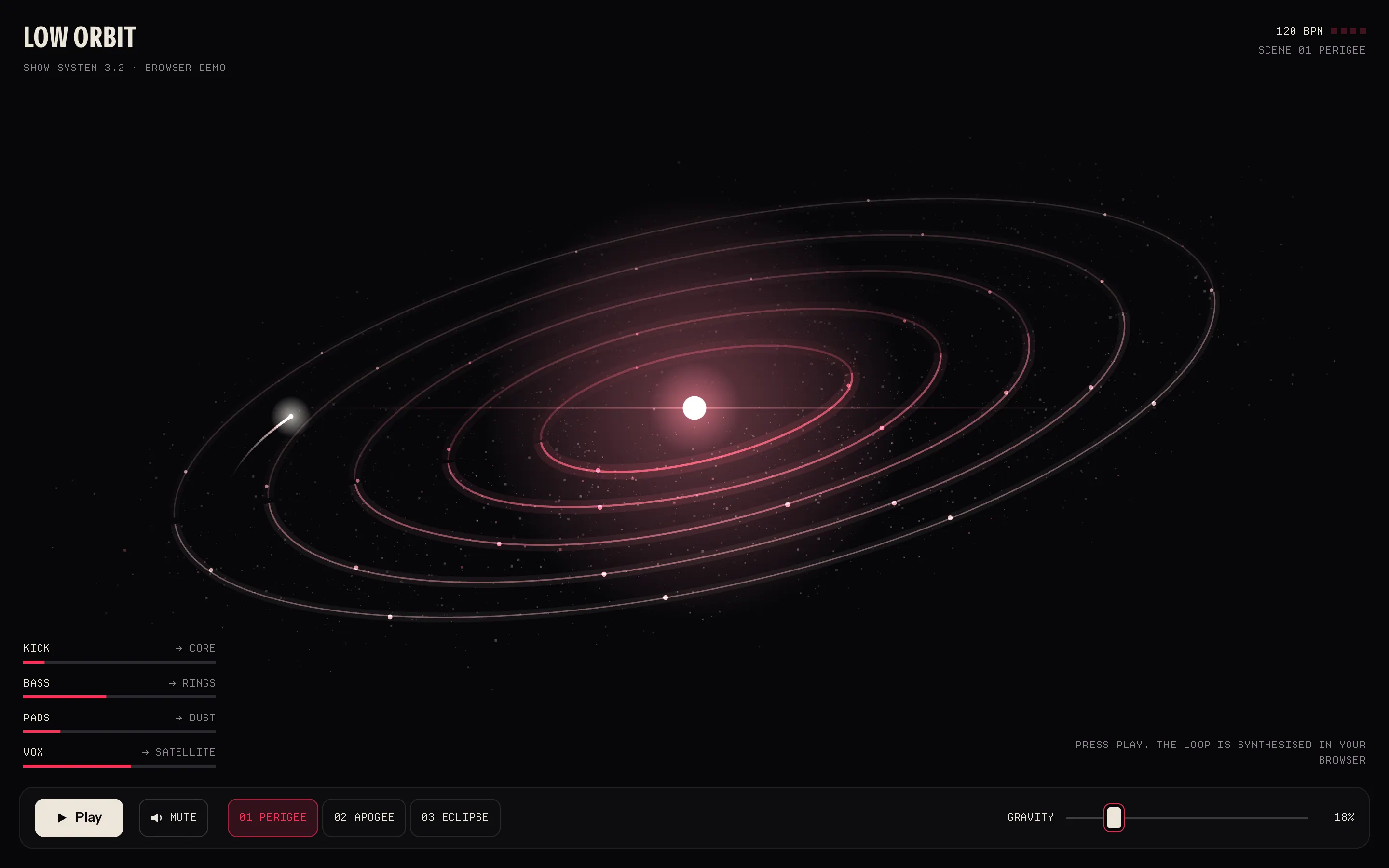
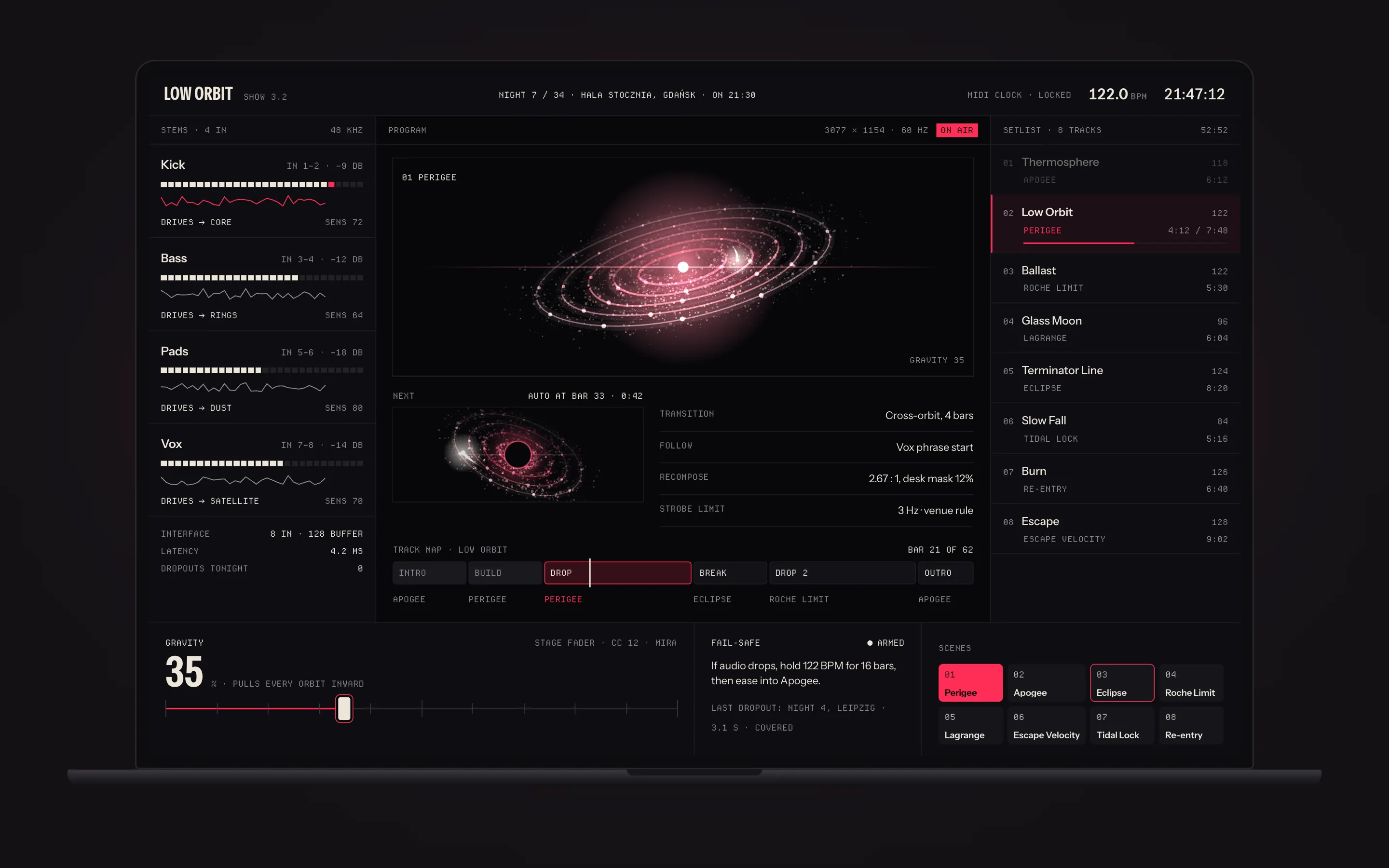
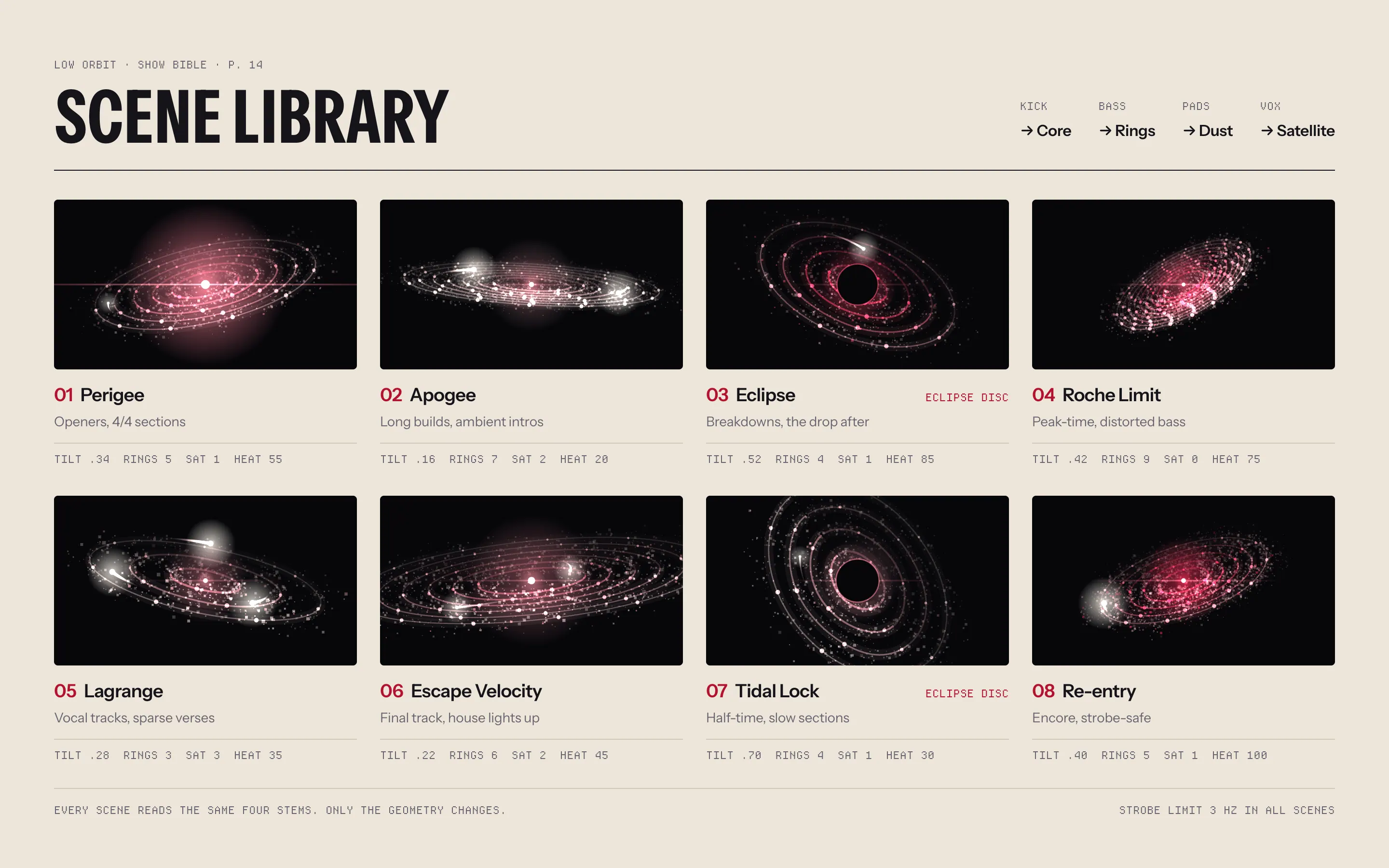
Mira’s set already leaves her interface as four stems, so the visual listens to each one on its own: the kick drives the core, the bass the inner rings, the pads the dust, the vocal the satellite. When she extends a breakdown by 32 bars nothing drifts, because there is no timeline to drift from. The music is the timeline.
- 02
Recompose for the wall, every night
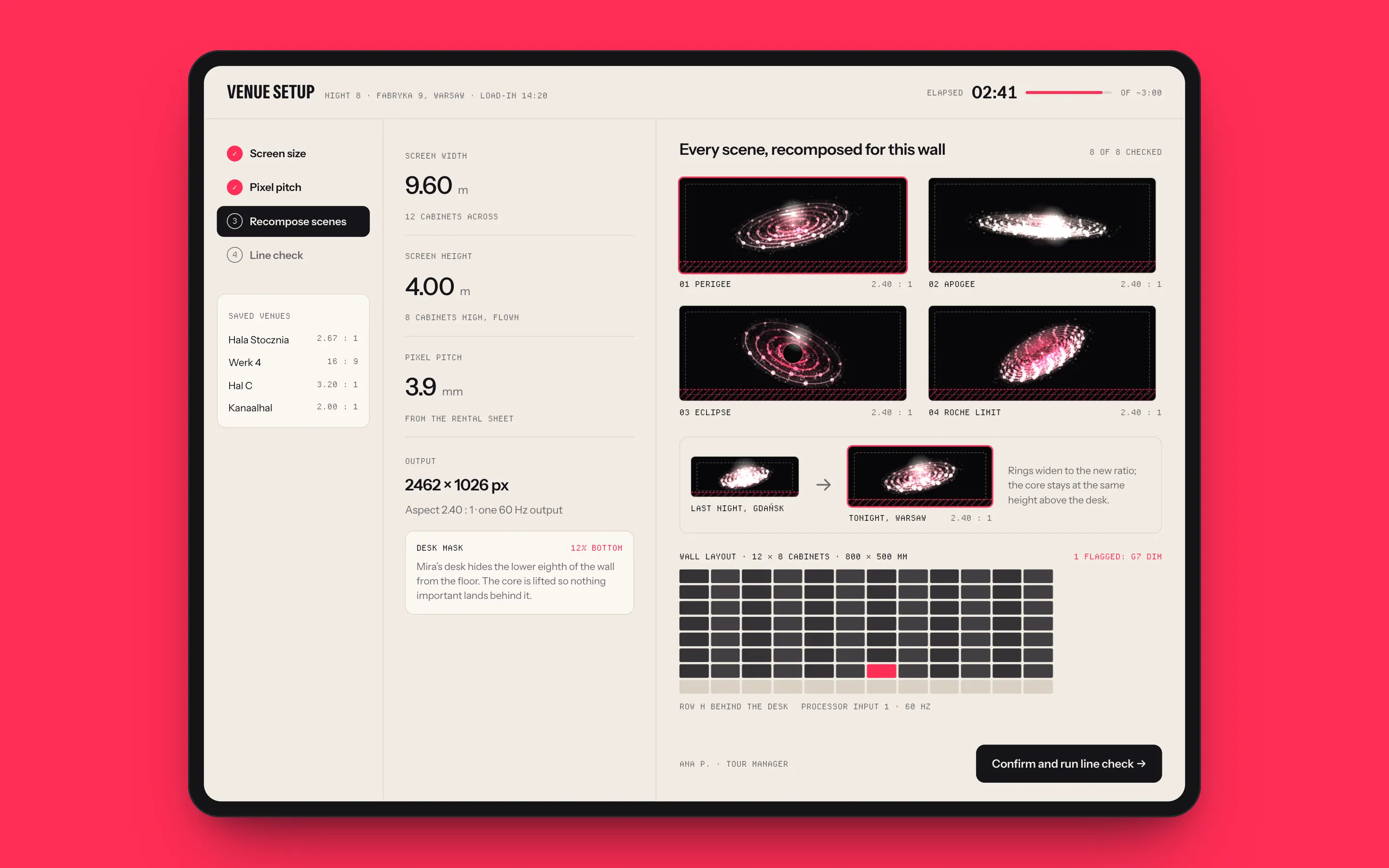
Ana types in the wall’s width, height and pixel pitch from the rental sheet. The system works out the output resolution and recomposes all eight scenes for that aspect ratio: rings widen for a 3.2 : 1 hall, and the core lifts so it never sits behind Mira’s desk. Saved venues come back in one tap.
- 03
One control on stage
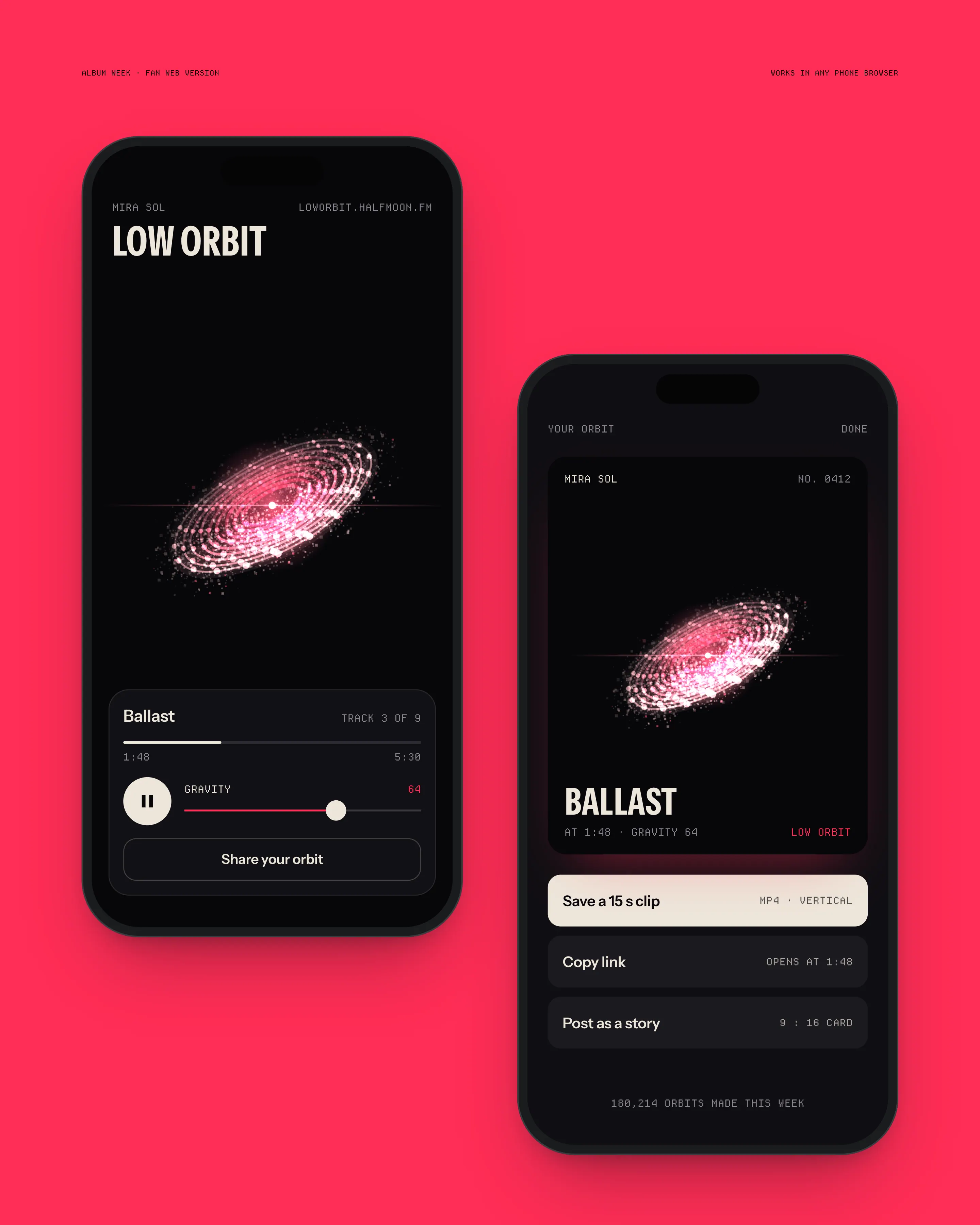
I took every parameter off the stage except one: a gravity fader on Mira’s controller. Pulling it draws every orbit towards the core and speeds it up, which is what a breakdown already feels like. She learned it in one soundcheck and used it every night.
- 04
Assume the cable will fail
If the audio drops, the visual keeps orbiting at the last tempo for 16 bars, then eases into a calm scene, so a loose cable reads as a moment of stillness instead of a frozen screen. It covered a 3.1-second dropout in Leipzig that nobody in the room noticed.
Outcome
Low Orbit ran 34 shows, from a 200-capacity room in Utrecht to a festival main stage, with no missed cues and no visuals operator. A new wall took a median of 2 minutes 58 seconds to set up; returning venues took under one.
For album week, Halfmoon Records released the same renderer as a fan web version: pick a track, play with gravity, save a 15-second clip of your orbit. It was played 180,000 times in seven days, almost all of them on phones.
Live demo
Play the stems
Try it
What the visual listens to
Each stem is measured on its own analyser before it reaches the speakers, so the visual hears the kick even when the room is thick with bass. Levels rise instantly and fall slowly, which keeps the motion from jittering on every transient.
Nothing is keyframed. A scene is only geometry: how far the orbital plane tilts, how many rings it has, how much dust, whether a black disc eclipses the core. The stems do the rest, so a scene I designed for one track still works when Mira plays something new.
“By the second night I’d stopped thinking about the screen. When the room needs to hold its breath I pull gravity down, and the wall holds it with me.”
- shows, with no visuals operator
- 34
- missed cues across the tour
- 0
- median setup on a new wall
- 2:58
- plays of the fan version in album week
- 180k